



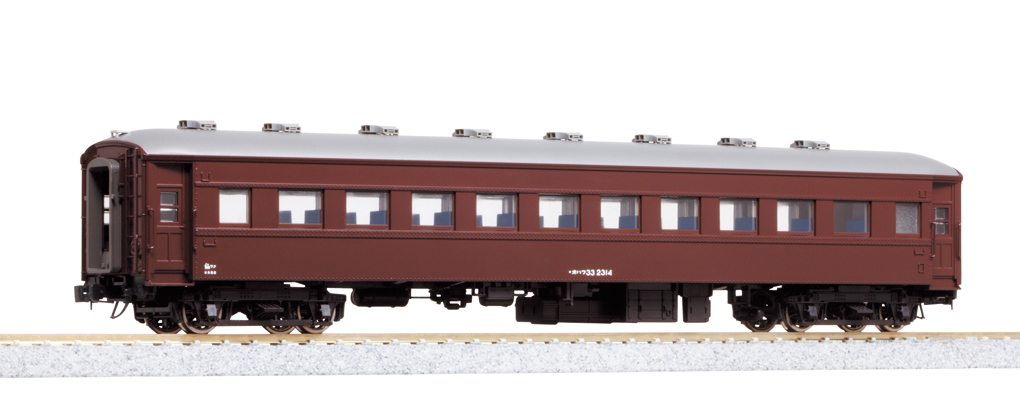


Description
The Ohafu 33 is the brake-coach version associated with the Oha 35 series, one of the most numerous and recognisable pre-war Japanese National Railways passenger coach families. These coaches were used widely across Japan on both express and local passenger services.
This brown HO gauge model is suitable for JNR-era passenger formations and works well with KATO's Oha 35, Suha 43 and other older passenger coaches.
Features
- HO gauge model of the JNR Ohafu 33 passenger brake coach in brown livery.
- Represents the Oha 35 family style with rounded roof ends, 1 metre passenger windows and TR23 bogies.
- Old-style coach details including wooden doors, rain gutters and riveted bodywork.
- Tail lights fitted, with switch-off function.
- Opening-window parts included, allowing selected windows to be modelled open.
- Includes lettering sheet and detail parts.
- Compatible with KATO HO interior lighting options.


Andrew Nicholson (verified owner) –
This an attractive coach with illuminated tail lamps at one end only, although from the outside I originally thought that both ends might illuminate as there are pickups in both bogies. To access inside, the couplings at both ends must be removed first by simply unclipping them from the undercarriage. Then following the instruction guide and having removed the false tank, the coach sides allow the undercarriage to come away gaining access allowing changing the windows from closed to half open. I realised that each pane has to be replaced individually. Also passengers can now be be added to the bright blue seating. The non operating lamp installation falls out when the undercarriage is removed. The coach can only be reinstated one way. Reseat the dummy lamp first and then offer up the undercarriage into place and clip in. Although it does not look correct everything looks fine when the couplings brackets are relocated. As always with Kato all the parts fit and work perfectly.